Robot Alchemic Drive
 Robot Alchemic Drive

I want a non-evil version of Bump
A month ago I saw this this Tumblr post screenshotting a Twitter thread about Bump and was enthralled by both its maximalist aesthetics and how utterly evil it was. Now, before I continue I do what to emphasise: Do not install Bump. It is horrendously evil.
Do not install Bump.
The linked post gives you both a good idea of how invasive Bump is and also what is repulsive but also potentially alluring about it: It records as much as it possible can about everything you are doing through every means it has available to it as a phone app, which is quite a lot. This is, as the thread says, shared with everyone that you have linked with on Bump. That of course means it is also recorded and sent to Amo, the company that makes Bump. People often have a very defeatist attitude about privacy, that so many companies are already tracking everything you do anyway, but Amo really go above and beyond with trying to hoover up everything they can about you and with the way this app works I doubt that internal safeguards are much of a priority. A reminder before I go on: Do not install Bump.
Myself and Caoimhe³ both installed it, added each other, and then deleted our accounts after a couple of days. It was even more of an invasive nightmare than I was expecting.
- If you do not allow access to your contacts straight away it repeatedly badger you to do so. I think it asked me five times before it reluctantly allowed me to continue without doing so.
- It obvious asks your location permission to work. The basic point is broadcasting your location to people, but even if you grant it location permission it will display constant red warning signs on the main map screen and lock you out of features until you grant Bump permission to read your location at all times, even when the app is closed.
- It will then also repeatedly ask you to disable power management features for Bump so that it can always keep monitoring you even when your battery is dying.
- It has a feature to add live widget to your phone’s homescreen that constantly tracks a specific person. Like, stalking your friends at all times is kind of the selling point in the first place, but bloody fuck.
- It doesn’t just want your raw location it is also interested in what places you hang out in and business you frequent. It locks features behind adding a certain amount of favourite locations that it can log you as being at. Each location also has public leaderboards that shows who is there most often, potentially showing where to find you even to people you never linked with in Bump.
- In its quest to log and display everything it goes as far as to display your live battery percentage to everyone (so you can’t feign low battery as an excuse for not replying or wanting to go out).
- Features are locked behind linking with enough people, so even if you were fine with sending all this (live, at all times) to a few people, it will push you to expand that circle.
And yet, I do see some of the appeal. The dwindling of third places gets talked about a lot and I think that something that facilitates spontaneous gatherings by being able to see when friends are nearby or in a group could have value. Back in the day this would be having a local pub where you would go without a plan in the hopes of running into people, but the cost of drinks are so goddamn expensive these days and most people do not want to be functionally alcoholic in order to have a social life any more.
Do not install Bump.
I think a non-evil version of this is possible, thought it would not be straightforward or easily. Something that provided some of this openness, at the discretion of the user, with many safeguards, that did not store any data, and was end-to-end encrypted, could actually have benefits. But it would also never, ever be profitable and would never have the backing that it would need to push it to large-scale adoption. And of course the intersection of people who are safety-focused enough to want these kinds of safeguards and people who are lax enough about privacy to want something like this in the first place is probably quite small.
The other thing about Bump is its maximalist aesthetics. It’s like a ’00s Nickelodeon children’s sitcom’s idea of what smartphones would become. A partner thought that it was aimed at young people who may not have been around for the Y2K aesthetic old web but have seen it evangelised through nostalgic lens. I do find it genuinely quite charming, especially its chat, which allows you to not just customise your textboxes in garish, clashing fashions but allows all elements to be freely moved around, rotated and zoomed, creating an utterly nightmarish form of communication that I kind of love.
I do kind of want this as its own thing. Give me the secure, end-to-end encrypted, privacy-focused, overstimulation nightmare group chat. I would probably get bored of it relatively quickly but I feel like I would have a good time for a few days and then again every few months when I’m feeling particularly silly and whimsical.

Do not install Bump.


Robot Alchemic Drive but protagonist has Jet Set Radio/Bomb Rush Cyberfunk movement
One X per year
I previously posted lists I’ve made picking one game and one film per year since 1990. 1990 acted as a good arbitrary stopping point as it’s a nice round number, it’s the year I was born and the number of games I’ve played at all from before then is pretty small, and it would be be fairly difficult to pick out shows for each year before then for me too. I’ve made a dedicated page on the site for these picks, made a few substitutions, added a pick for each for 2025 and added one series of television per year as well. All put into one table with the ability to toggle off which media you want to see selections for as well as some dynamic rearrangement based on screenspace, all done with (a horrendous mess of) Cascading Style Sheets and no Javascript.
These are not necessarily my favourite from each year. I have tried to be deliberate to give a spread of different styles and series I like as well including some weirder picks. Especially with games I spent a lot of time weighing choices for particular years based on what series I wanted to include and some years are just packed with formative games for me. 2001 has Metal Gear Solid 2, Silent Hill 2, Commandos 2 and Halo (and Grand Theft Auto 3 and Advance Wars and Worms World Party…). I eventually gave the year to Metal Gear Solid 2 after weighing up that I could have Resident Evil 2 and Silent Hill: Shattered Memories covering some bases for Silent Hill 2, Shadow Tactics was spiritually taking up a place for the Commandos series and there’s already plenty of shooters there to justify dropping Halo.
Similarly Prey is spiritually covering for System Shock so that I can have a childhood favourite Soleil for 1994 and Half-Life would probably beat out Resident Evil 2 in a head-to-head but there’s already two Half-Life games on there and I wanted it to carry the survival horror water for both the aforementioned Silent Hill 2 and for the REmake that got booted out from the previous iteration to make room for Robot Alchemic Drive. And yes after going on about carefully spreading out my choices I did give three picks to Sonic games, one to another Sonic Team-developed game and two more to Sonic-inspired indie games (and four different series of Doctor Who for the TV list). I will not be taking feedback on this.
Again the page is here and the lists are also on my Letterboxd, Serializd and Backloggd accounts as well as a second Letterboxd list covering the years 1970-1989.



















Marionation Gear ★★★★☆
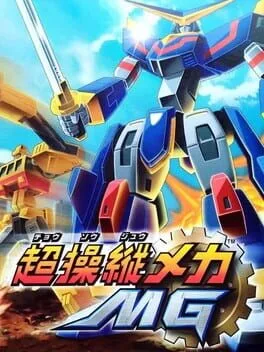
Super fun little thing. Dozens of different mechs to pilot each with their own unique little toy control schemes on the touchscreen. Some more practical and straightforward, others more silly and gimmicky. Cars with a steering wheel and gear stick; missiles with their own multi-step launch sequences; a revolver where you have to load each individual bullet, pull back the firing pin, then pull the trigger; a steam-powered robot that is a beast in close combat but must be powered by pulling a lever to open the furnace doors, shoveling in coal, building steam pressure and then finally turning a valve to let the pressure out and power the arms (and don’t forget to close it again to build the pressure up for the next round).
Less endearingly the power creep throughout the game means that fun puppets you get early on are going to mostly stop being useful as you progress through the game and filling out your roster with upgraded versions takes a lot of replaying and grinding out levels, both to earn cash and also to get blueprints that drop randomly from specific missions. There’s also nothing in-game to indicate which missions provide which blueprints either so if you want something specific you’ll need to consult a guide. Late-game missions also become a chore with long slogs fighting waves of enemies that can, and often will, juggle you to death if they manage to knock you over once. And when there are too many robots in a level the frame rate really suffers. Even just trying to find where the next mission unlocked on the world map becomes a pain over time as it turns into a sprawling mess.
With regards to story, tone and presentation the game reminds me a bit of Advance Wars, with this seemingly quite small world culturally dominated by marionation gear1—the game’s puppet mechs—the strongest of which of course end up piloted by a bunch of thirteen year olds to save the world from the horrors of traditional artisanal work being replaced by soulless automation and mechanised warfare.
-
The fan translation more literally translates the title of the game, 超操縦メカMG, as Super Control Mecha MG but I prefer to just call it Marionation Gear after the puppets. ↩
reading a conversation online about the ethics and logistical problems of space colonisation and just thinking “they are failing to consider Nectar Radiance”
Remote Control Dandy ★★★★☆
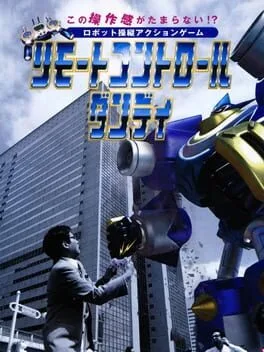
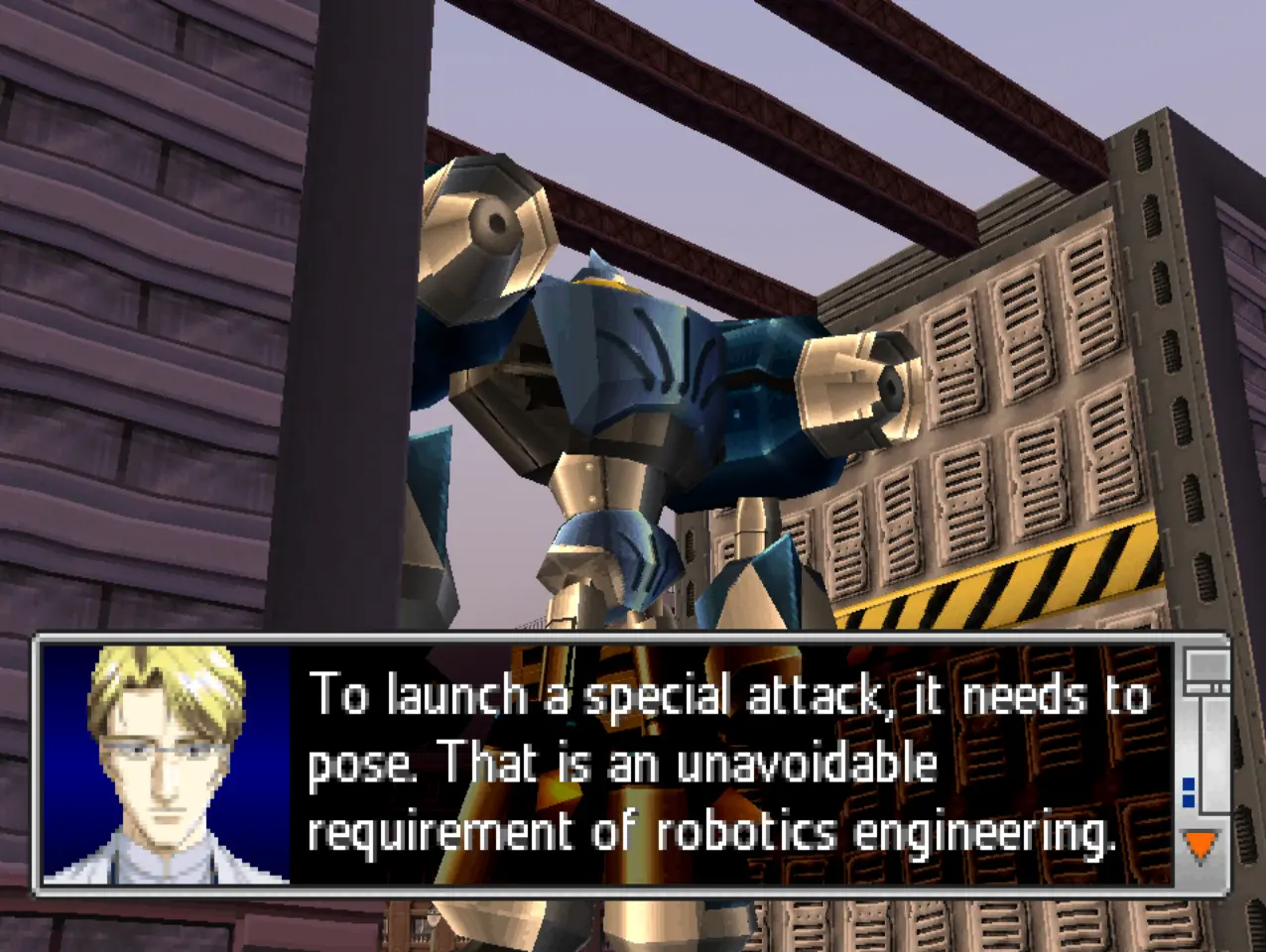
To launch a special attack, it needs to pose. That is an unavoidable requirement of robotics engineering.
I wonder how my feelings towards this and Robot Alchemic Drive would be if I played them in the order that they were released in. In many ways Remote Control Dandy feels like a first draft of RAD. A lot of the same ideas are explored. Similar character archetypes, reused scenarios, even a similar selection of maps for the areas that make up Torino and Senjo: The new downtown area, the old city centre, the docks, the power plant on the mountain. Both even have a map of Shinjuku for a mission where you have to defend the Tokyo Metropolitan Government Building. I definitely feel like a second go at this both lead to a more interesting and compelling story in RAD as well as just a more fun experience. Mechanics that were a small part of RCD get a bigger focus in RAD while a lot of the other concerns fade into the background.
Conversely, while RAD feels like a second draft it actually feels less polished. RAD’s story is more interesting but also less coherent and I don’t think that all of that can be blamed on the rushed (but charming) localisation. In RCD’s favour is that it looks a lot better for a Playstation game than RAD does for a Playstation 2 game. Partly that is aesthetic choices. RAD’s muted palette, Playstation 2 blur and general griminess aren’t doing it many favours, but while it boasts bigger maps and longer draw distances there is a conspicuous lack of damage models for buildings and other details that make Senjo feel a bit more sterile compared to RCD’s Torino. Animated character portraits, a more visual novel-style intermission section and a much fancier and seamless robot selection and launch screen also just make seem like more time and care was allowed in this game than was for RAD.
There is also some more detailed simulationist aspects to RCD that are dropped in its successor. Both games have monetary system to incentivise keeping property destruction down but RAD’s is much more forgiving, simply giving you a base amount of money per mission and then bonuses for protecting key buildings and minimising damage. RCD on the other hand (and somewhat more logically) gives you a larger upfront amount but penalises you for all damage done to the city over the course of your giant robot fights. You can, in fact, lose money on a given mission. The robots available to you even cost variable amounts to send into battle. Do you use the cheap, steam-powered robot that doesn’t have big fancy attacks, or do you send your expensive nuclear-powered model? You can go bankrupt if you spend everything and and smash up the city too much. You can also cause so much property destruction that the populace turns against you. In the second game this has largely been simplified away. RCD has more intricacies here, and that can definitely be appealing, but in the end RAD’s more lackadaisical approach lets one have a lot more fun driving a big stompy robot smashing through buildings without the looming risks of bankruptcy hanging over one’s head (though one is given more second chances than the game initially lets on).
And it’s interesting to see other elements that are somewhat vestigial in RAD having more of a presence here. In both games police cars drive around the city while you do battle. In RCD you have to pay the cost of them if they get destroyed but you are assured that they are automated patrol cars there only to detect and deter people from coming back into the evacuated city to steal while everyone is missing. You definitely aren’t killing anyone so don’t worry about it. The manual for RAD keeps this explanation that the patrol cars are automated drones despite the fact that RAD is more than happy to let you casually crush and mow down crowds of people as they spray comically large clouds of blood. You are not penalised for it at all; it is simply part of the slapstick. Yet it still keeps the excuse that the cars are automated, despite it not serving any purpose.
But for all RAD can feel like a rushed copy of this game, it’s still fundamentally the more fun one. RCD is great in its own right but it feels lacking compared RAD’s analogue stick controls, more engaging mech fights and more fun cast. The battle mode in RCD is also disappointing. While it does allow for playing against computer-controlled opponents it simply gives both players direct control over their robots from a birds-eye view, removing the core dynamic of having to deal with playing as a pilot operating from a ground level.
To end on a compliment, though, Remote Control Dandy’s final boss is much cooler than and has some more interesting unique gameplay tricks than Robot Alchemic Drive’s. Evidently the developers thought that they hit a winner there too, as one of the unique aspects of RCD’s final boss ended up being promoted to a core gameplay mechanic in RAD.
Also the fact that you can combine Vordan’s tornado arms and remote control rocket fist is extremely funny.
Tekkōki Mikazuki (demo) ★★★☆☆
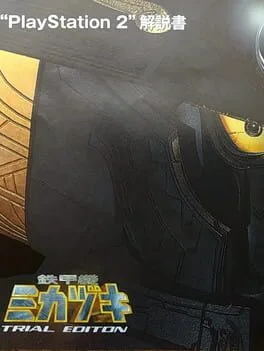
A demo for a cancelled tie-in game for a TV show that got reworked into Robot Alchemic Drive. Very interesting to compare it to the final game. The first thing that jumps out is that the map seems much more detailed here than any in RAD. It makes me wonder what kind of budget and time constraints RAD had during its development. That said, RAD also features extensive use of picture-in-picture effects and panicking crowds running around in the story mode as well a split-screen multiplayer option which might have put some more strict resource constraints on its maps than the largely static Tokyo of this demo. The only things moving around are the player character, their robot, the big watermelon kaiju and the buildings that you are smashing apart as you fight it.
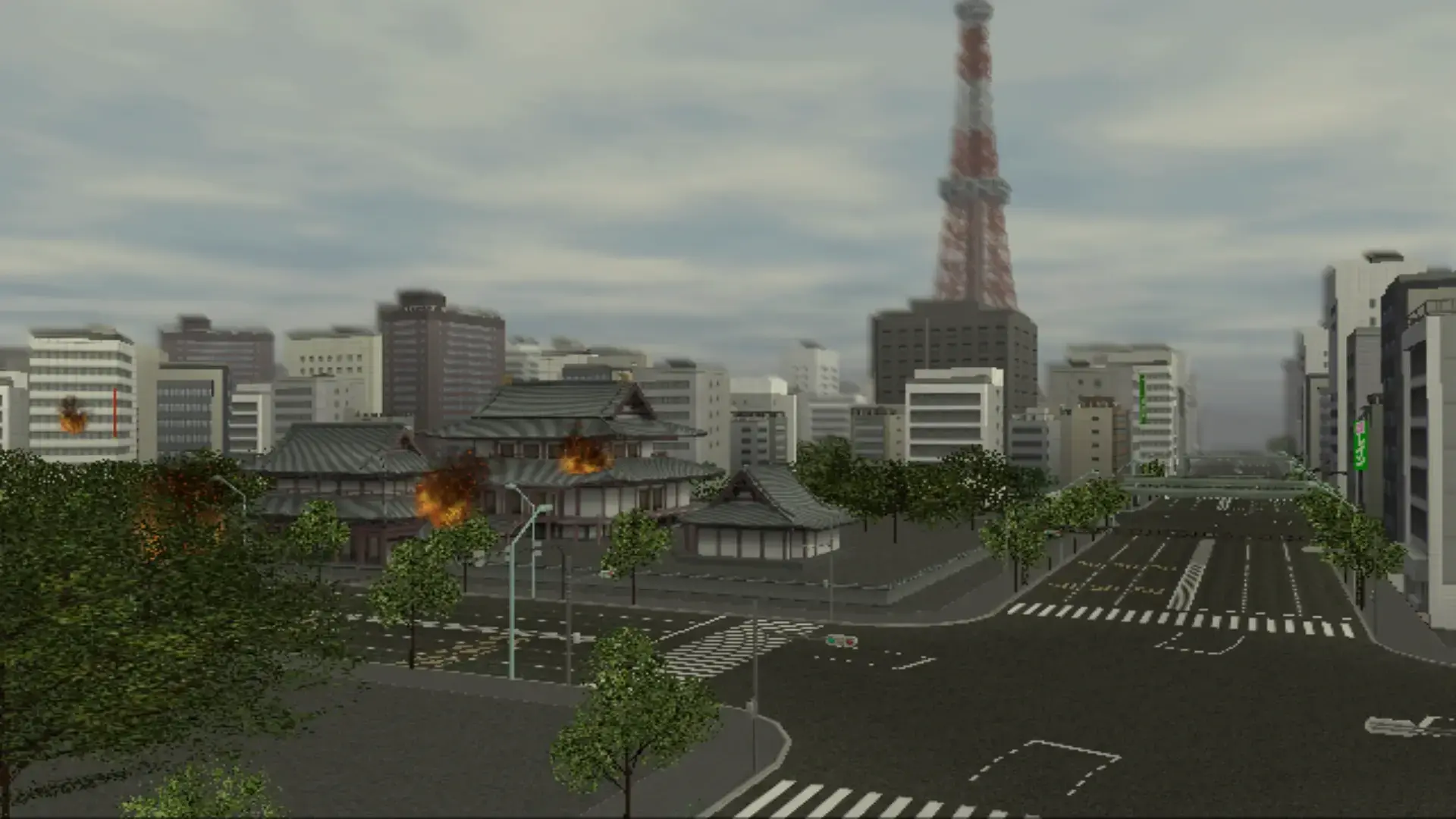
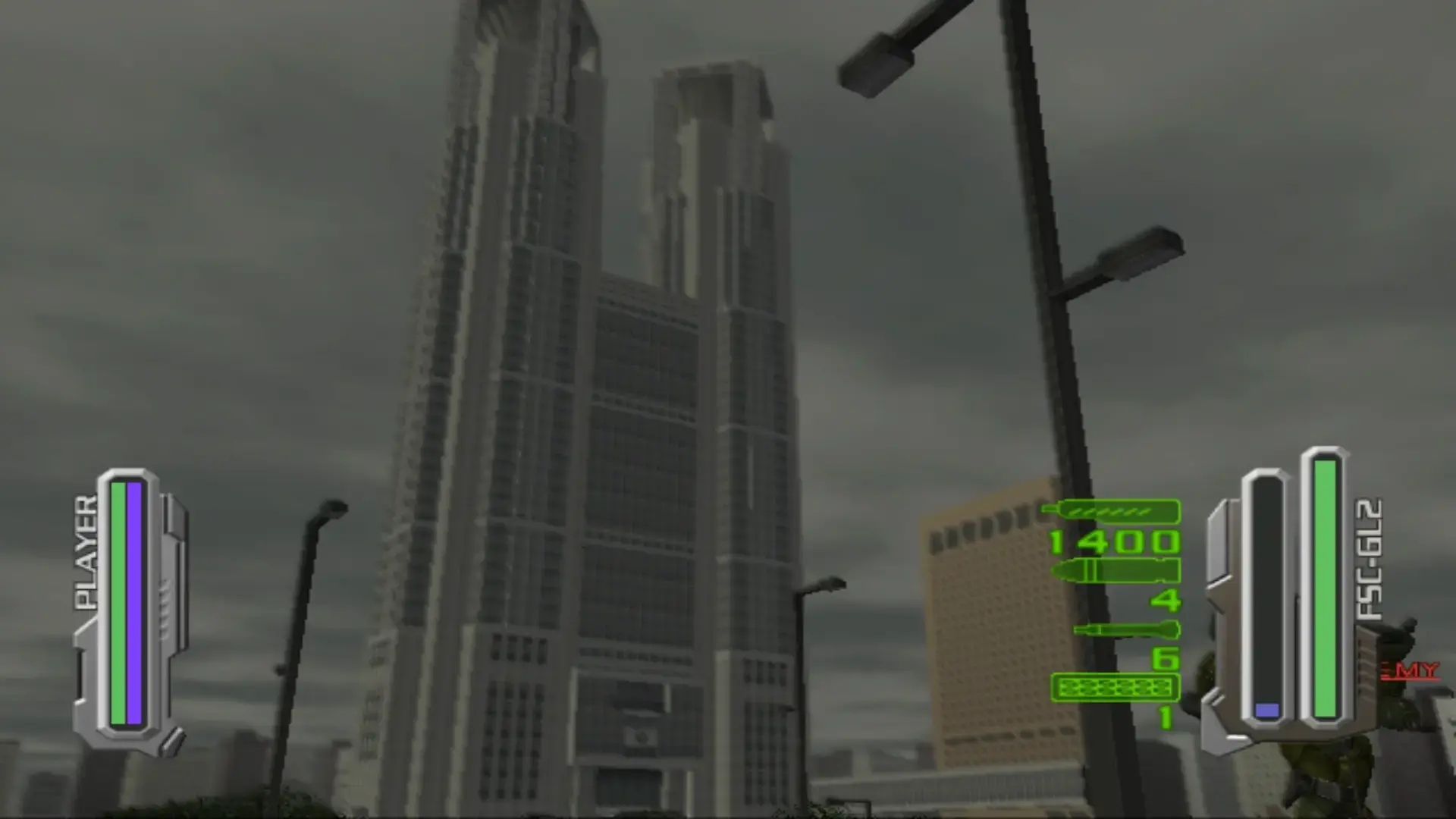
Some of the assets from this demo seem to have been reused for the intro cutscene of the third level in RAD, both of which take place around Tokyo Tower, though when the level proper starts in the final game you are actually in a completely different map based on a different part of Tokyo featuring the Tokyo Metropolitan Government Building. The layouts of the maps in this demo and the cutscene in RAD don’t match up so they didn’t just reuse the same map, but some of the buildings appear to us the same models.
Both demo and final game do not feature a pause menu; the select button in both switching between pilot and robot and the start button showing control reminders in the demo and a map screen in the final game, but in the demo’s free-roam mode a message at the top of the screen informs the player that pressing select and start together will quit back to the menu. This feature is still functional in the challenge and versus modes in RAD but as far as I can tell not documented anywhere in the game or its manual1.
The watermelon monster is taken from the first episode of Tekkōki Mikazuki it’s just a very fun design. The conceit of controlling the robot from the ground is not from the show, though, and is taken from Remote Control Dandy, a game that Robot Alchemic Drive is very clearly a spiritual successor to, reusing and reworking many of the same concepts. The robot controls in this demo, though, are very simplified, using something like the “easy” control option from RAD for moving Mikazuki and without the different array of attack options present in either game. Perhaps the developers only had working or wanted only to present a basic, less complex version of the control scheme than they had in mind for the full game, but the end result in this demo lacks the clunky, expressive charm of RAD or its predecessor.
-
In the English version at least, I cannot speak for the Japanese version. ↩
The third mission of Robot Alchemic Drive starts with a news broadcast about Tokyo being under attack. You see some in-engine footage of this in a map with Tokyo Tower. When you start the level it’s actually in a completely different map that features the Tokyo Metropolitan Government Building. The map with Tokyo Tower is never used for gameplay.
Robot Alchemic Drive was build on top of a cancelled game based on Tekkōki Mikazuki. There was a demo for that game released and it features a map that includes Tokyo Tower and some of the same temple buildings visible in the R.A.D. cutscene, though the layout of the two maps don’t match.
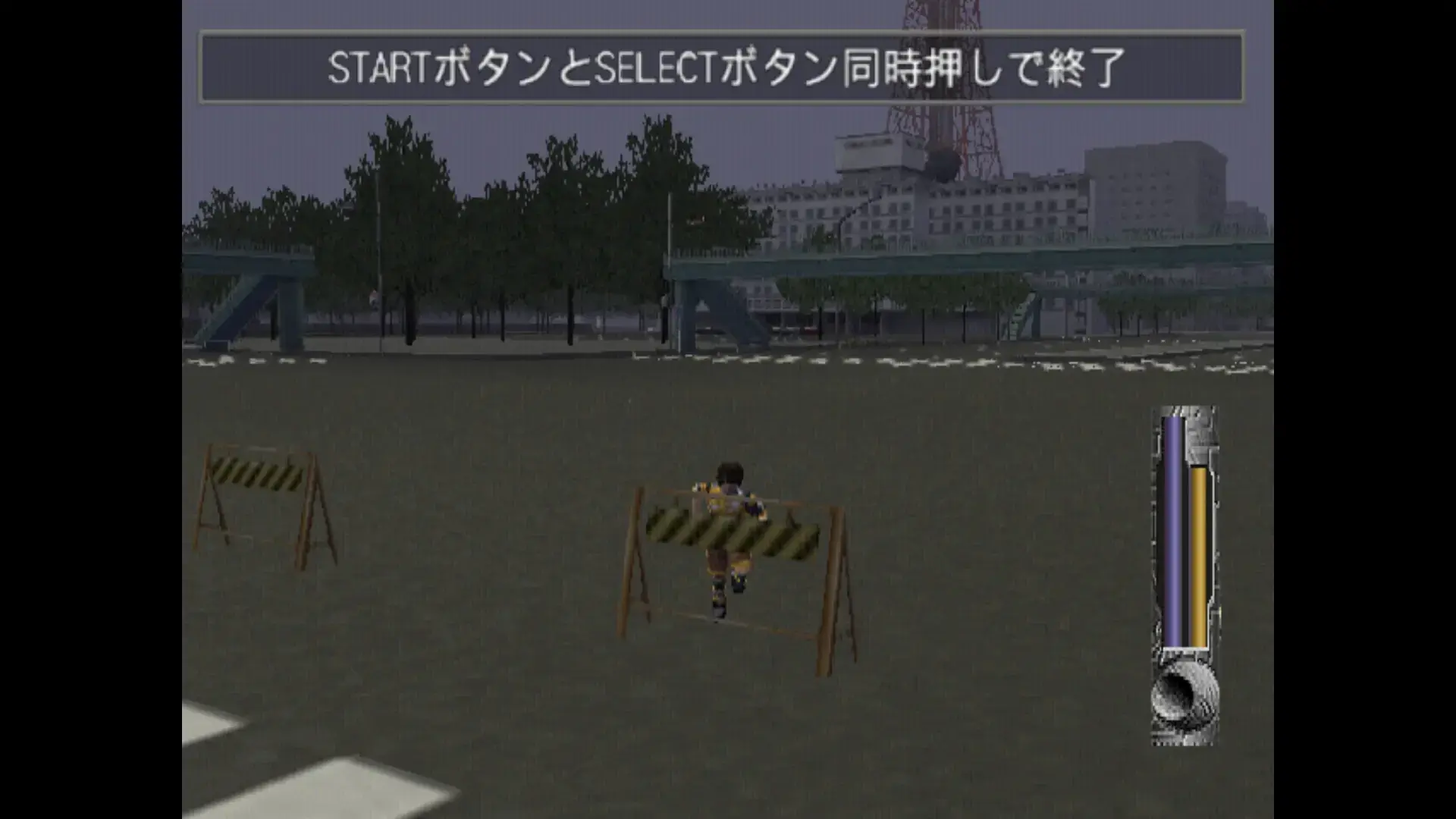
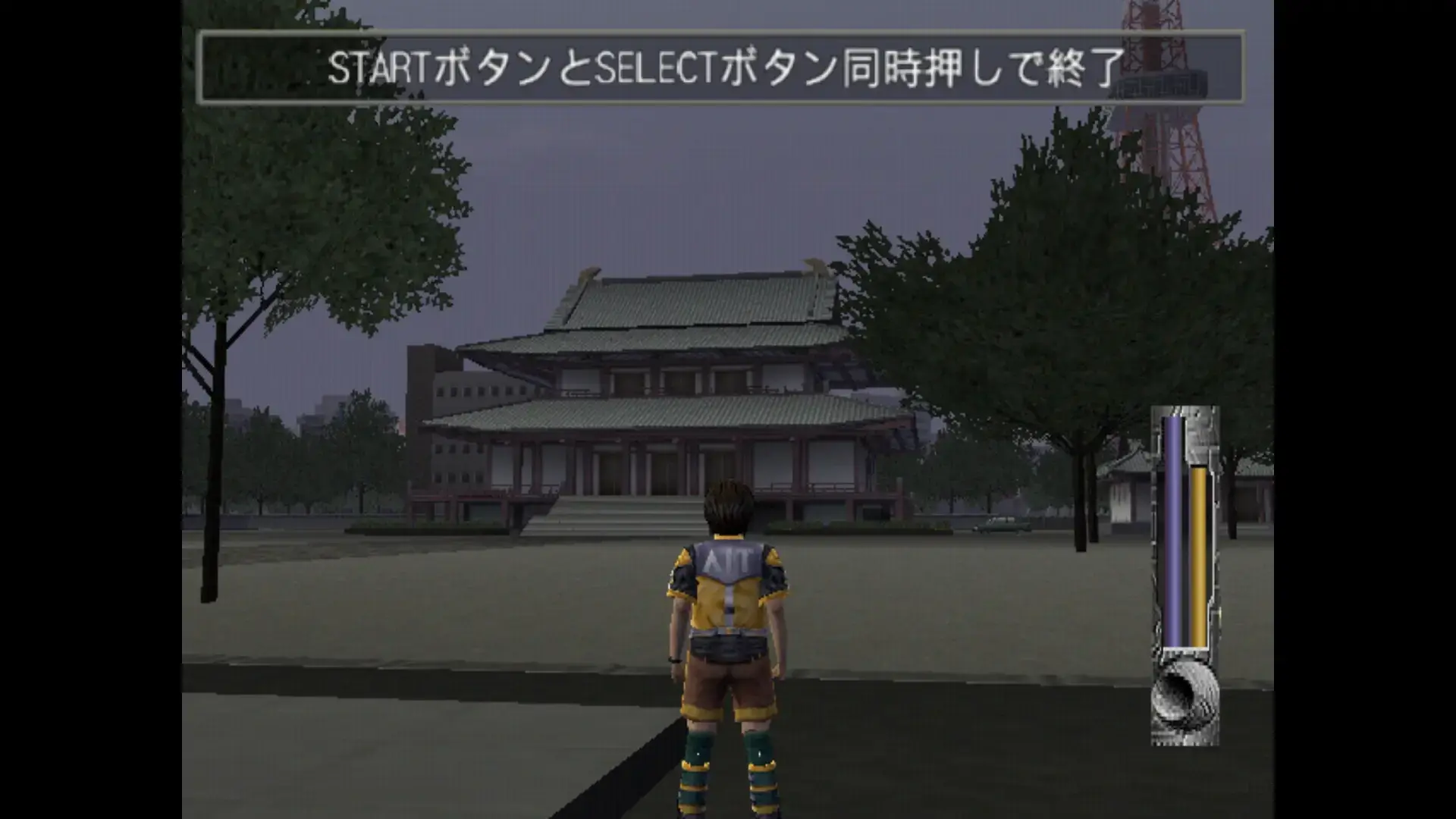
The text visible on top of the screen in the Tekkōki Mikazuki demo says that you can press the start and select buttons together to quit back to the menu. I don’t think this is documented anywhere in the English version of Robot Alchemic Drive or its manual but this command still works in the challenge and versus modes of that game (though not the story mode).
huh apparently Robot Alchemic Drive started as a licensed game for a tokusatsu show that ended up being cancelled after six episodes so there was only ever a demo of the game released
I knew it was a spiritual successor to Remote Control Dandy but not this
Robot Alchemic Drive ★★★★★
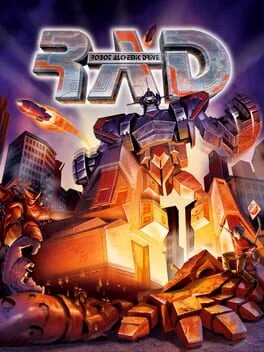
I really love a game that is deliberate in its controls. That doesn’t try to make everything as smooth as possible. That has a sense of physicality and realness to it. System Shock’s modular, maximalist UI, Metal Gear Solid 2’s intricate and deliberate controls, the process of discovering and operating your submersible walker in Nauticrawl. I love a game that feels like operating heavy machinery and there is no machinery heavier than Gllang.
Robot Alchemic Drive has such a wonderful conceit. You are piloting a giant robot—a meganite—against giant invading alien kaiju robots—the volgara. You must swap between controlling the pilot and the meganite, but the perspective and camera always stays with the pilot. You are watching from ground level, or from a rooftop, or from the shoulder of your robot, and it’s rarely a simple or smooth process. Judging the distance, the angle, how to aim or throw a punch from a distance. The controls aren’t simple either. Each analogue stick controls an arm, and each pair of shoulder buttons the legs. Just to walk forward you need to alternate L1 and R1 to take each individual step. I’ve wanted to play it ever since watching Videochess playing it a few years ago and the more recent surge in Nanao-posting finally pushed me to jump in myself.
And it’s just a blast to play. It can be a bit repetitive but you do get three meganites to play with if you want to shake it up. I did mostly stick with Thrones-class Gllang the Castlekeep, because if it’s it a game about being a big, stompy robot why would you not want to be the biggest, stompiest robot? Gllang is slow but loaded up with weapons and you can eventually unlock the ability to unload every gun it has at once, which makes for a very satisfying finishing move. He can also transform into fortress mode, a surprisingly fast and slippery tank the width of an entire motorway to compensate for how slow his walk is. On the fast and light side there’s Cherubim-class Airborne Dominator Laguiole who can turn into a V-TOL jet and Seraphim-class Vertical Fortress Vavel as the middle of the road bland main character robot who can’t transform into anything but has a super mode that gives you a time limit of three minutes to finish the mission within or else he’ll explode (though if you pick Gllang or Laguiole at the start they will also get a similar super mode late in the story).
The game is a bit repetitive, throwing you into fight after fight, but it tries to throw in different twists on the formula either as a once-off or in little mini-arcs that explore a particular idea for a few missions. You will have to deal with poison gas, putting out fires, various twists on the enemy units’ Phantom System teleporter that allows them to dodge all ranged attacks until they are on low health, and a various other things. None of these ever really get integrated back into the gameplay in a more systematic way. The meganites can pick things up but it’s only useful in one or two missions (though there is some fun to be had in experimenting with picking yourself up).
There are also missions that focus more on the protagonist’s relationships with various characters, most importantly Nanao, who is a perfect angel who no one is ever allowed to be mean to except for me when I keep “accidentally” blowing up the buildings she works in. Amusingly blowing up various buildings is one of the main drivers of character interactions. Masaru, the stuck-up heir to an arms manufacturing conglomerate, gets more and more character development the more you repeatedly blow up his company’s headquarters. The general campiness, which extends to the gameplay itself, is also enhanced by the localisation, which is charmingly low budget and aiming for the energy of old cheezy dubs of Gamera and Godzilla movies (though they could have left out the bad Japanese accent that they give to the news reporter and no one else). The story does go in some darker directions at times and it put my slightly in mind of Neon Genesis Evangelion but where Gendo died and they just put Shinji in charge (but still did not tell him anything).
It does feel like there was more ambition here than was able to be filled, with dramatic and especially the more dream-like sequences struggling to convey themselves with the game’s fairly simple cutscenes and descriptions of the situation in the city of Senjo and Earth in general getting worse and worse as the war wages on being undercut by every map being completely reset whenever the next mission starts.
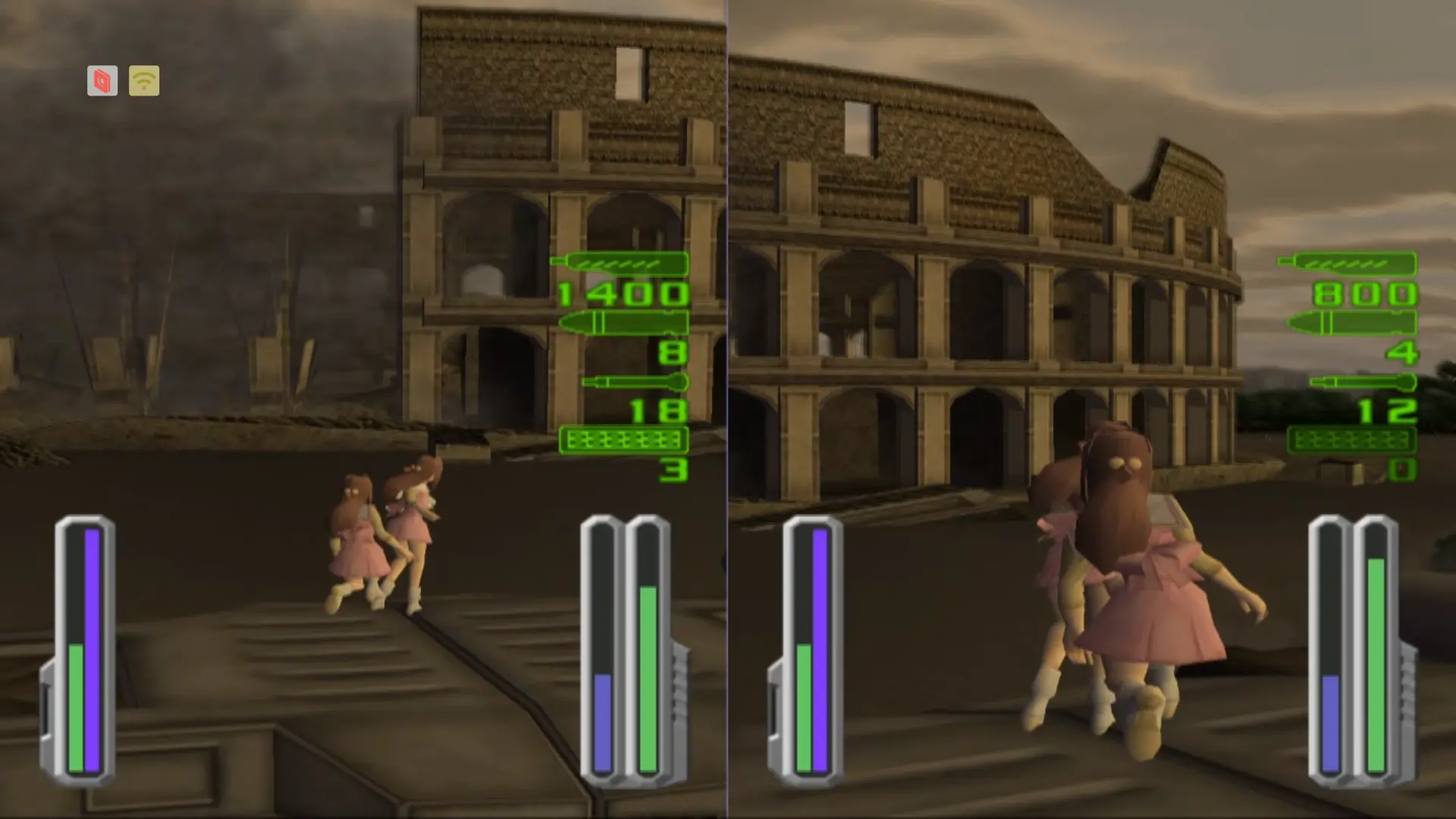
There is also a multiplayer mode that is both a little barebones but shocklingly generous with how much it offers. You choose a map and then each player chooses a pilot and a robot to control and then it dumps you in a splitscreen match. First person to have the health par of either the robot or the pilot deplete loses. But it doesn’t just offer the three megatnites; every volgara that you defeat in the story mode gets added to the roster and every map from the story mode is there with all their moves from the story mode. Even the Rome map that only appears in the opening cutscene of the story is here and fully playable, modelled well beyond what was needed for the intro. And with no time limit, no scorekeeping and a match only ending when something dies it leaves it very open to different strategies or even just being a toybox to make up your own game. You can focus on the other player’s robot or their pilot. The robots are giant, slow, targets, but the pilots are small and have a hard time defending themselves directly. You can ride on your robot to not have two targets, but it’s quite easy to get knocked off and find yourself in a very vulnerable position. You can agree to have an honourable robot fight and not attack each other’s pilots or you can forego the robots entirely and just chase each other with grenades. Myself and Ruby had a blast just messing around with it in various ways. We had a match where we tried to pick up each other’s pilots with our robots, first person to get grabbed loses. After that was resolved we just both rode around on her Gllang together in tank mode blowing up Rome.
And it’s also just a game that sets me off imagining how I would tweak it. What would I try to make if I made something like this? Could contextual or once-off mechanics be made more systemically useful or interesting? I think some way to control the pilot and robot at once would be cool; maybe the D-pad can always control the pilot while the analogue sticks and shoulder buttons are reserved for the robot? Or a two-controller mode where one controls the pilot and the other the robot? I just want more of this, different iterations of it. I am already eyeing up the fan translations of Remote Control Dandy and Marionation Gear.
Miscellaneous observations:
- There is only one walkthrough for the game on Game FAQs and the author hates both Gllang and Nanao. They have not been vindicated by history.
- In the famous bread and water soup mission the protagonist complains that 7-Eleven charge too much for vegetables and it’s cheaper to get them at the greengrocer when the smallest unit of currency you work with while upgrading your giant fuck-off robots is ¥500,000,000.
- As well as the hammy acting often being funny there’s a few great deadpan bits that really got me. In an early missions one of the people in mission control tells you to explore the city and familiarise yourself with the area while you wait for the meganite to launch. When the call back a minute later to ask if you’ve gotten familiar with the city the protagonist just responds “Well, yes. I live here.”
- The cutscenes aren’t skipable but holding down the start button fast forwards them which is very funny to watch.
- It’s one of those games with a choice of protagonists where they do not change the script very much if you pick the female hero so her and the love interests just become lesbians, which is great.

cartoony video game sprays of blood, people being run over by a car
was flicking through a Youtube playlist for a specific Robot Alchemic Drive cutscene and caught his one of Ellen telling Yui to be careful during a an evacuation training exercise while cops run people over in the background
girls night
The many crimes of Videochess
I don’t watch game streamers much but one of the few who I have enjoyed a lot is Videochess (a.k.a. Chess). She doesn’t stream regularly at the moment but she has wonderful chaotic energy and a propensity for “crimes”, a term she uses for playfully exploring the mechanics of and pushing at the boundaries of games and seeing what is possible if one strays from the designated path. This can manifest as things like impromptu sequence breaking but not for the purposes of speedrunning or anything like that, just to see where it goes and tease out the foibles of a game. And sometimes she does things like collecting every star in Super Mario 64 while playing the game with a DJ Hero controller.
There are two main places to find her videos, her own Youtube channel that has her streams up until 2022 and another unofficial but endorsed channel that has archived more recent streams. One of her most popular series is an Ocarina of Time randomiser with GGDG but below I will share some of her videos that have had the largest influence on me.
Snolf
Her truly Sisyphean streams of Melon’s Snolf hacks inspired me to make my own Snolf Robo Blast 2 mod for Sonic Robo Blast 2 as well as a chat control mod that Chess ended up playing herself.
Discovering new games
I have also learnt about games and mods that I have since played or are now on my (long) list of things I want to get around to.
Robot Alchemic Drive I still have not gotten around to playing but seems fascinating. I love games with weird controls and especially when there is a diegetic basis for them. Having to remote control a giant robot from the perspective of someone on the ground who has to watch it from a distance rather than getting a camera from the perspective of the robot itself or even a cockpit is an incredible concept. You may be familiar with the game from clips that get shared online showcasing the best value greengrocer or Nanao having a miserable time.
I had only vaguely heard of Cave Story before watching her play “Cave Story Normal Regular”1, i.e. Sonic Story, a mod that replaces the main character of the game, Quote, with Sonic the Hedgehog. Yes, I know this is a massively important and influential game. No, I never bothered looking into it at all despite having had the Steam version in my library for years from some Humble Bundle or another. I have played both Cave Story and Sonic Story since and I can attest that Sonic Story perfectly replicates the feeling of how Mega Drive Sonic games control. It’s not just a reskin it is is playing as Sonic the Hedgehog in the wrong game in a way that is wonderful and silly.
For the opposite she has played Mario put into a Sonic game with the SM64 Generations mod, which uses libsm64. She has also played some other games using libsm64 as well as other regular normal Mario 64 mods.
Willy Wombat
I also became obsessed with Willy Wombat for a while after watching her play it. It is a fascinating, experimental 3D platformer with an isomorphic perspective with maps that have the same limitations as a Doom level: There are no slopes and not only are there no floating platforms but it’s impossible to have a floating platform in this game. Like Doom the levels are defined by floor sectors with designated heights. There are pillars and walls that rise out of the ground for vertically, but you can never go under anything. It leads to some unique level design, especially as the game progresses to areas were the developers had clearly gotten much more comfortable with their tools. The only thing I can think of that is similar (though lacking the top-down perspective) is older versions of Sonic Robo Blast 2 and that is literally a fork of Doom.
It’s also one of those bygone ’90s games that is fully voiced in English with a script penned and directed by a Japanese crew, giving it a surreal quality that is aided by a post-apocalyptic setting with jarring name choices and very little up-front exposition. Above is a fan animation I adore of a cutscene of Notes and Mail talking about “the peace and eternal life of Prison.”

I have a page on this website dedicated to my cat Easóg where you can see a video of her trying to kill Willy while I am watching Chess play the game and mushroom32x made a fun little Neocities webpage for the game’s 20th anniversary.
There’s plenty more
That’s enough for now. If you want to watch more check out the official and unofficial Youtube channels to dig through yourself.
-
Calling things “normal regular” or “regular normal” when they are, in fact, peculiar is one of several Chessisms that have infected my vocabulary. ↩